
Few rules start more arguments than offside. It sounds complicated, but the idea behind it is simple: attackers should not be allowed to wait next to the goal for a long pass. Here is the rule in plain English.
When a player is in an offside position
A player is in an offside position if, at the moment a teammate plays the ball to them, any part of their head, body or feet is in the opponents' half and closer to the opponents' goal line than both the ball and the second-last opponent. Being level with the second-last opponent is not offside, and the goalkeeper usually counts as one of the two opponents.
Being offside is not an offence by itself
Standing in an offside position is not punished on its own. The referee only gives an offside offence if that player becomes involved in active play, for example by receiving the ball, interfering with an opponent or gaining an advantage from the position.
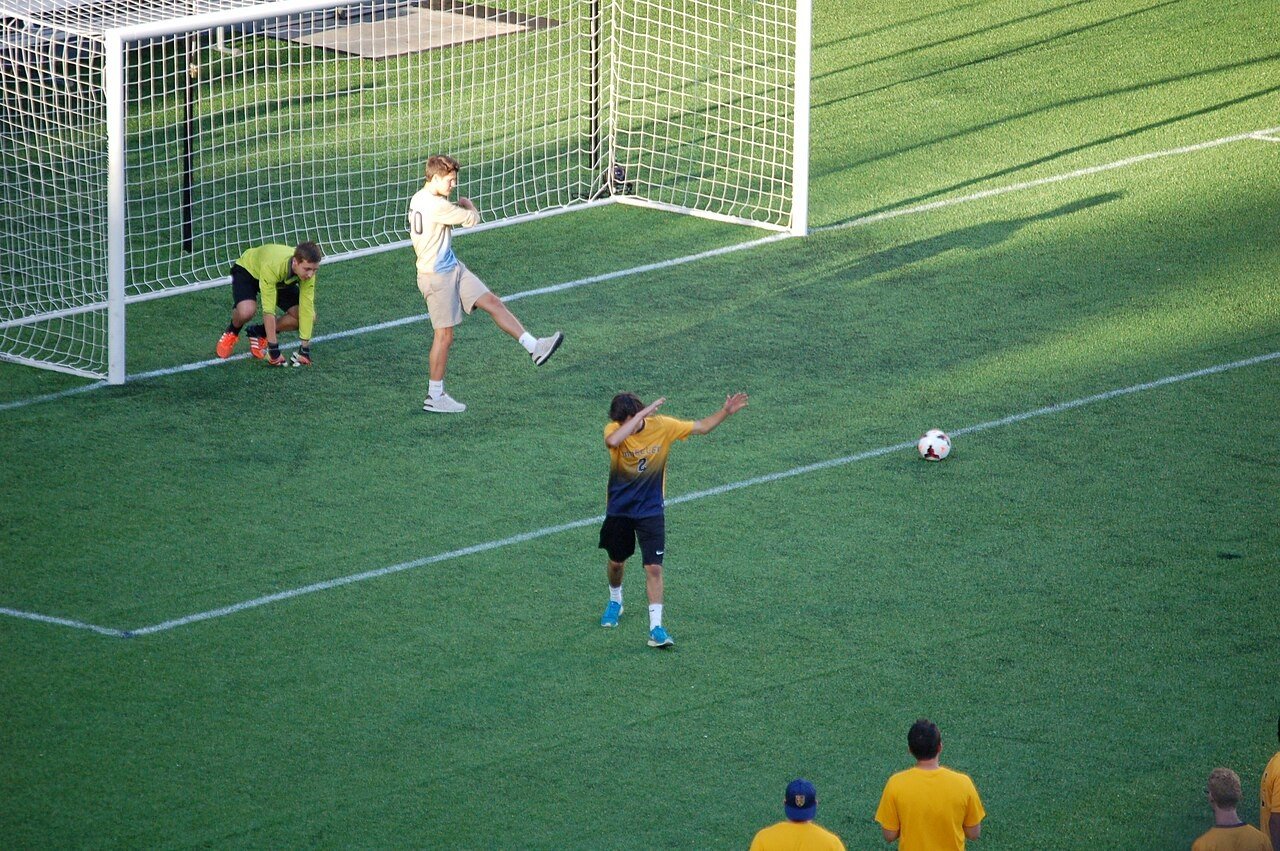
Players during a soccer match. Photo: Hayden Schiff, CC BY 2.0, via Wikimedia Commons.
When offside does not apply
A player cannot be offside directly from a goal kick, a throw-in or a corner kick. A player also cannot be offside in their own half of the pitch.
What happens after an offside call
The opposing team is awarded an indirect free kick from the place where the offside player was when the ball was played. That means the ball must touch another player before a goal can be scored.
Video review now helps officials check close calls in many competitions, but the basic idea of the rule is the same as it always was.